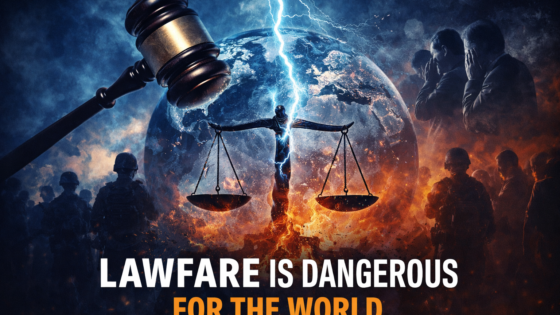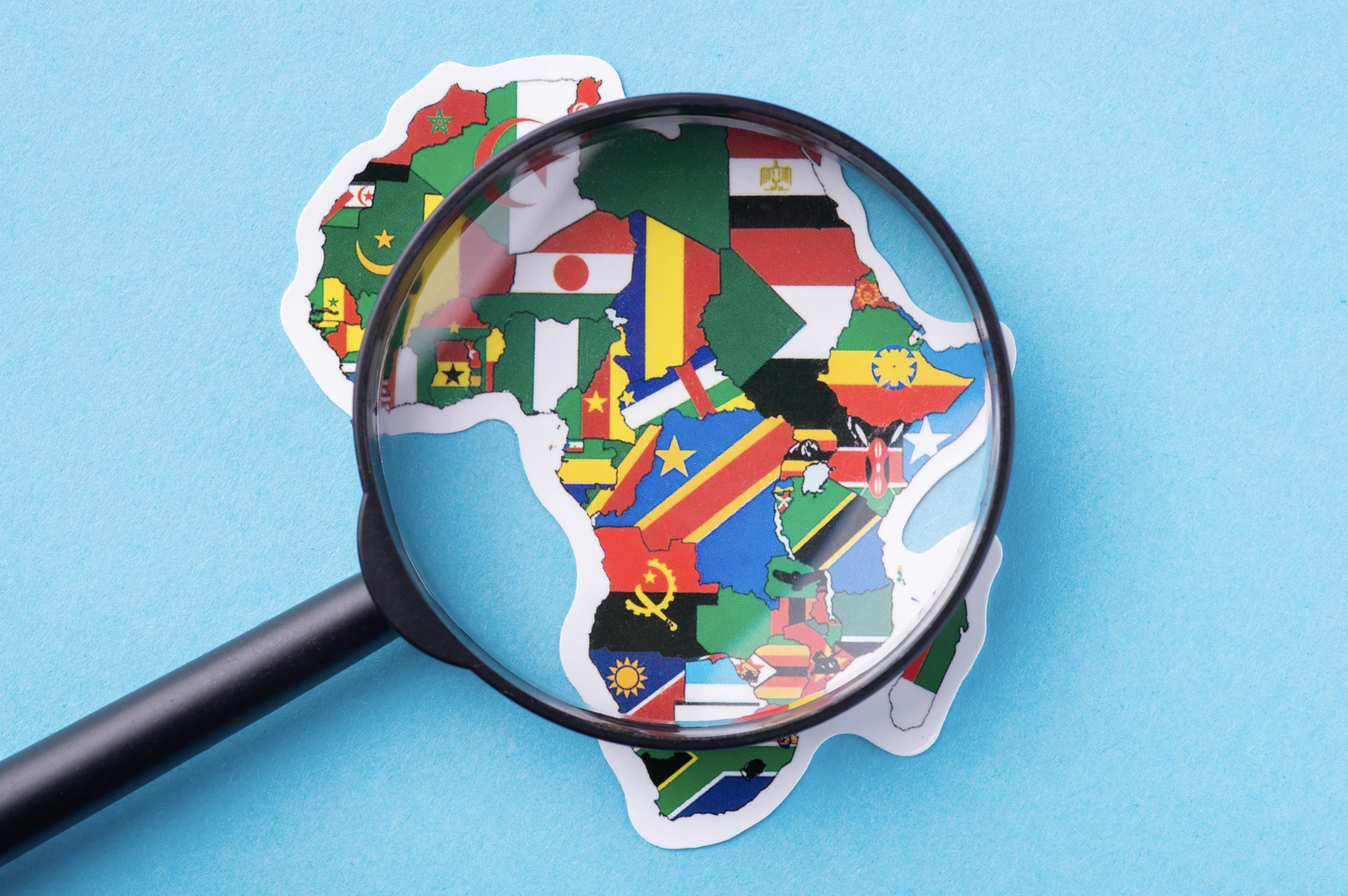
Across Africa, a quiet but devastating practice has taken root: lawfare — the use of legal systems as weapons to eliminate political opponents, silence dissent, and re-engineer power under the appearance of legality. Unlike coups or open repression, lawfare wears the mask of justice, making it one of the most dangerous threats to democracy and sovereignty on the continent.
Lawfare does not protect Africa. It weakens it.
What Lawfare Looks Like in Africa
In many African countries, lawfare follows a familiar pattern:
-
selective prosecutions targeting political or economic rivals,
-
courts and prosecutors aligned with executive power,
-
asset freezes and arrests before trial,
-
media campaigns that declare guilt before evidence is tested,
-
and legal processes timed to elections or political transitions.
The result is punishment without verdict, exile without conviction, and fear without accountability.
Africa’s Long History of Judicial Manipulation
Lawfare in Africa did not begin recently. Its roots stretch back to the post-independence era, when legal and institutional tools were often inherited from colonial systems and repurposed to consolidate power rather than protect citizens.
One of the most tragic early examples is Patrice Lumumba, the first Prime Minister of the Democratic Republic of Congo. Lumumba was not defeated in open democratic debate. He was neutralised through legal and political manoeuvres that framed him as a threat, justified his removal, and ultimately enabled his assassination. His fate remains a stark reminder that when law and justice are separated, truth becomes expendable.
Modern Lawfare and Political Rewriting
Today, lawfare is often justified as “anti-corruption” or “reform.” While genuine accountability is essential, selective justice is not reform.
Isabel dos Santos – Angola
The case of Isabel dos Santos illustrates how lawfare operates in modern Africa. Accusations of embezzlement, money laundering, and illicit enrichment have been widely publicised, yet many legal actions against her have occurred:
-
amid serious concerns about judicial independence,
-
alongside political declarations of guilt before verdicts,
-
with asset seizures preceding final judgments,
-
and through international pressure driven as much by narrative as by proven criminal findings.
Isabel dos Santos has consistently denied wrongdoing and argues that she is the target of a politically motivated campaign following a change in power in Angola. Regardless of opinions about her wealth or background, her case raises a critical question for Africa: Can justice exist where punishment comes before proof?
Laurent Gbagbo – Côte d’Ivoire
In Côte d’Ivoire, former president Laurent Gbagbo was transferred to the International Criminal Court following the 2010–2011 post-election crisis. After nearly a decade of proceedings, he was acquitted due to insufficient evidence. Yet by the time justice caught up, his political life, reputation, and country had already been irreversibly altered. This is lawfare’s power: even when it fails legally, it often succeeds politically.
Lula da Silva – A Global Parallel
While not African, the case of Lula da Silva is instructive. Convicted and imprisoned through a process later ruled biased, Lula was barred from elections before his convictions were annulled. His experience demonstrates a universal truth: lawfare is not about guilt or innocence; it is about timing, power, and removal. Africa is not immune to this global strategy.
Why Africans Must Reject Lawfare
1. Lawfare Undermines Sovereignty
When justice becomes political, African states lose credibility internally and internationally. Decisions are no longer trusted as lawful, but as tactical.
2. Lawfare Destroys Democracy Without Banning It
Opponents are removed through courts rather than ballots. Elections continue, but choices are engineered.
3. Lawfare Creates Fear, Not Accountability
Entrepreneurs, activists, journalists, and public servants learn that success or independence can make them targets. Silence replaces innovation.
4. Lawfare Replaces Reform With Revenge
True anti-corruption reform strengthens institutions. Lawfare weakens them by turning justice into a score-settling tool.
The Human Cost
Behind every lawfare case is a human story:
-
families displaced,
-
livelihoods destroyed,
-
reputations erased,
-
lives lived in exile or fear.
These are not abstract legal debates. They are lived realities that shape Africa’s future.
Why Lawfare Watch Speaks Out
Lawfare Watch exists because Africa deserves justice that is fair, independent, and equal — not justice that serves power.
We believe:
-
accountability must be universal, not selective,
-
courts must protect rights, not political agendas,
-
and Africans must question narratives that criminalise without proof.
Standing against lawfare is not defending individuals.
It is defending Africa’s dignity, democracy, and future.
A Call to Africans Everywhere
Africa cannot build strong institutions on fear and selective justice.
It cannot prosper where law is used as a weapon.
To defend Africa, we must defend justice itself.
Join Lawfare Watch. Question. Examine. Demand due process.
Because when law becomes a weapon, no one is safe.
Why Lawfare Slows Down Africa’s Development